
create the same cinematic style:

-PROMPT-
How FHA Mortgages Open the Door to Homeownership

Can you use an FHA mortgage to become a homeowner? Yes — and millions of Americans already have.
Here’s the quick answer:
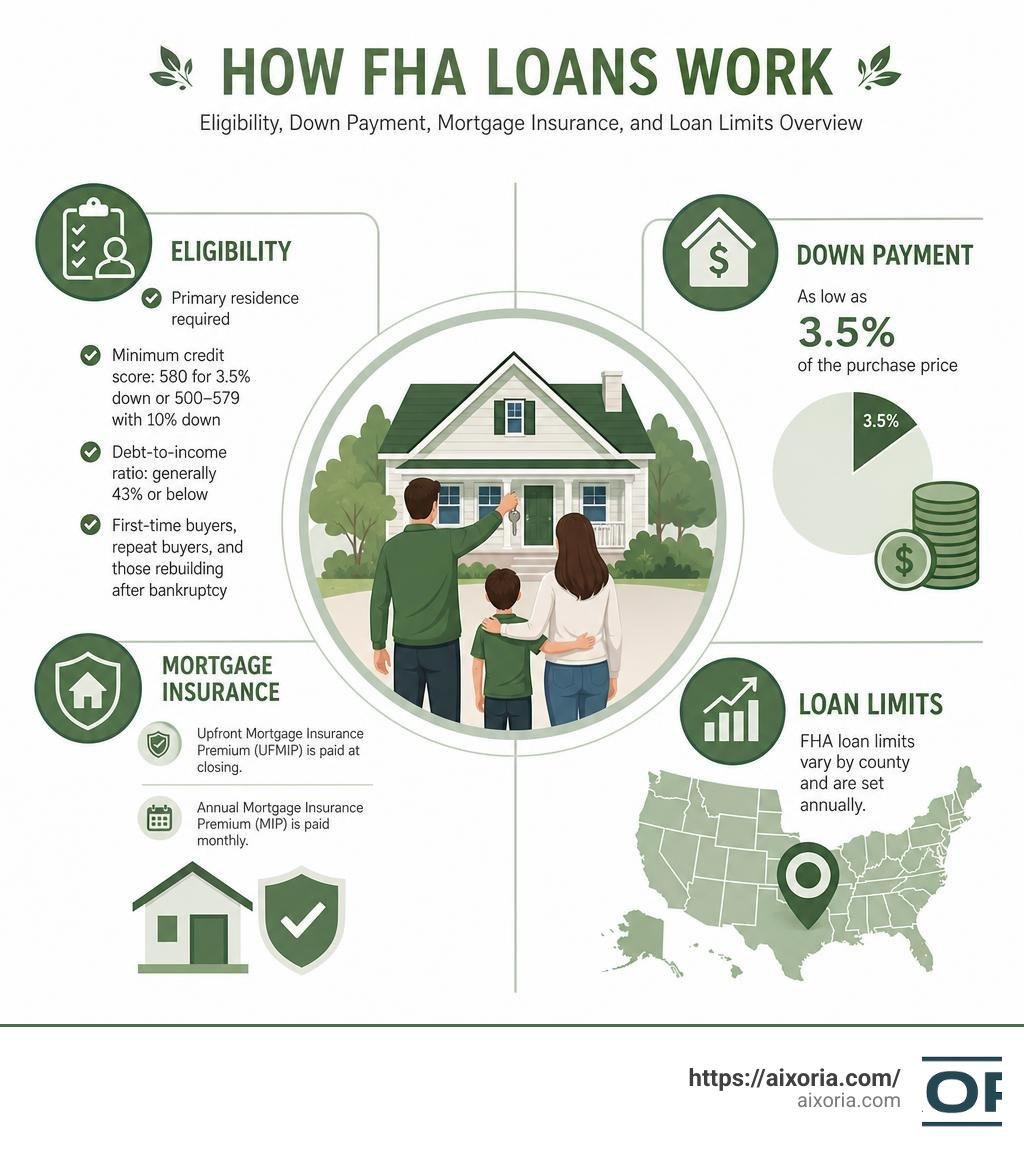
- Yes, FHA loans are open to most buyers who plan to live in the home as their primary residence
- Minimum credit score: 580 for a 3.5% down payment, or 500-579 with 10% down
- Down payment: As low as 3.5% of the purchase price
- Debt-to-income ratio: Generally 43% or below
- Who qualifies: First-time buyers, repeat buyers, and even those rebuilding after bankruptcy
- Who does not qualify: Buyers seeking investment properties, vacation homes, or short-term rental properties
The Federal Housing Administration has been making homeownership possible for everyday Americans since 1934. Born during the Great Depression, the FHA program was designed to help people who couldn’t meet the strict standards of conventional lenders. Today, FHA loans account for more than 25% of all new mortgages in the United States — and it’s easy to see why.
The appeal is simple: lower barriers to entry. You don’t need a perfect credit score. You don’t need a huge savings account. You just need to meet a few clear requirements and find an FHA-approved lender.
Whether you’re buying your first home or starting over after a financial setback, an FHA loan could be your most practical path forward.
Can I Use an FHA Mortgage to Become a Homeowner?

When you ask yourself, “Can I use an FHA mortgage to become a homeowner?” the answer is a resounding yes. However, to understand how this program works, we first need to clear up a very common myth: the government does not actually hand you the money for your home.
Instead, the Federal Housing Administration (FHA) acts as an insurance company. They promise private banks and mortgage companies that if you, the borrower, default on your payments, the government will step in and cover the loss. Because lenders have this safety net, they are much more willing to offer mortgages to people who might not have flawless financial track records.
To take advantage of this protection, you must use the home as your primary residence. This means you cannot use a standard FHA loan to buy a vacation home or an investment property that you plan to rent out immediately. If you want to dive deeper into the basics of these government-backed loans, you can read our FHA Loans: Complete Guide for Home Buyers to see how they can work for your unique situation.
Can I Use an FHA Mortgage to Become a Homeowner with Bad Credit?
Absolutely. In fact, this is where the FHA program truly shines. Conventional loans often require a credit score of at least 620, and even then, your interest rate might be sky-high if your credit is less than stellar.
With an FHA loan, the rules are much more forgiving:
- FICO Score of 580 or Higher: You qualify for the maximum financing option, which requires a down payment of just 3.5%.
- FICO Score of 500 to 579: You can still get approved, but you will need to put down a 10% down payment.
That while the government sets these minimums, individual mortgage lenders can enforce their own stricter rules—known in the industry as “lender overlays.” Some banks might require a minimum credit score of 580 or even 620 regardless of the official FHA guidelines. It is always smart to shop around with multiple lenders to find one that fits your credit profile. For a detailed breakdown of eligibility criteria, check out this guide on FHA Loans: Who Qualifies and How to Apply.
Can I Use an FHA Mortgage to Become a Homeowner if I Already Own a House?
Yes, but with some very strict caveats. The FHA generally permits you to have only one active FHA loan at a time to prevent people from using the program to build real estate empires. However, we occasionally run into scenarios where a second FHA loan is allowed.
The FHA makes exceptions for the following situations:
- The 100-Mile Relocation Rule: If you are relocating for employment or a new job opportunity that is at least 100 miles away from your current home, you can obtain a second FHA loan to purchase a new primary residence.
- Increase in Family Size: If your family has grown to the point where your current home no longer meets your needs, and you have at least 25% equity in your existing home, you may qualify for a second FHA loan on a larger property.
- Divorce or Vacating a Jointly Owned Property: If you are vacating a home jointly owned with a former spouse or partner, and they will remain in the old home, you can use an FHA loan to buy a new primary residence of your own.
As always, the new property must become your primary residence within 60 days of closing. For answers to specific property eligibility questions, you can consult the Questions and Answers on Buying a Home with an FHA Mortgage.
FHA Loan Requirements for 2026
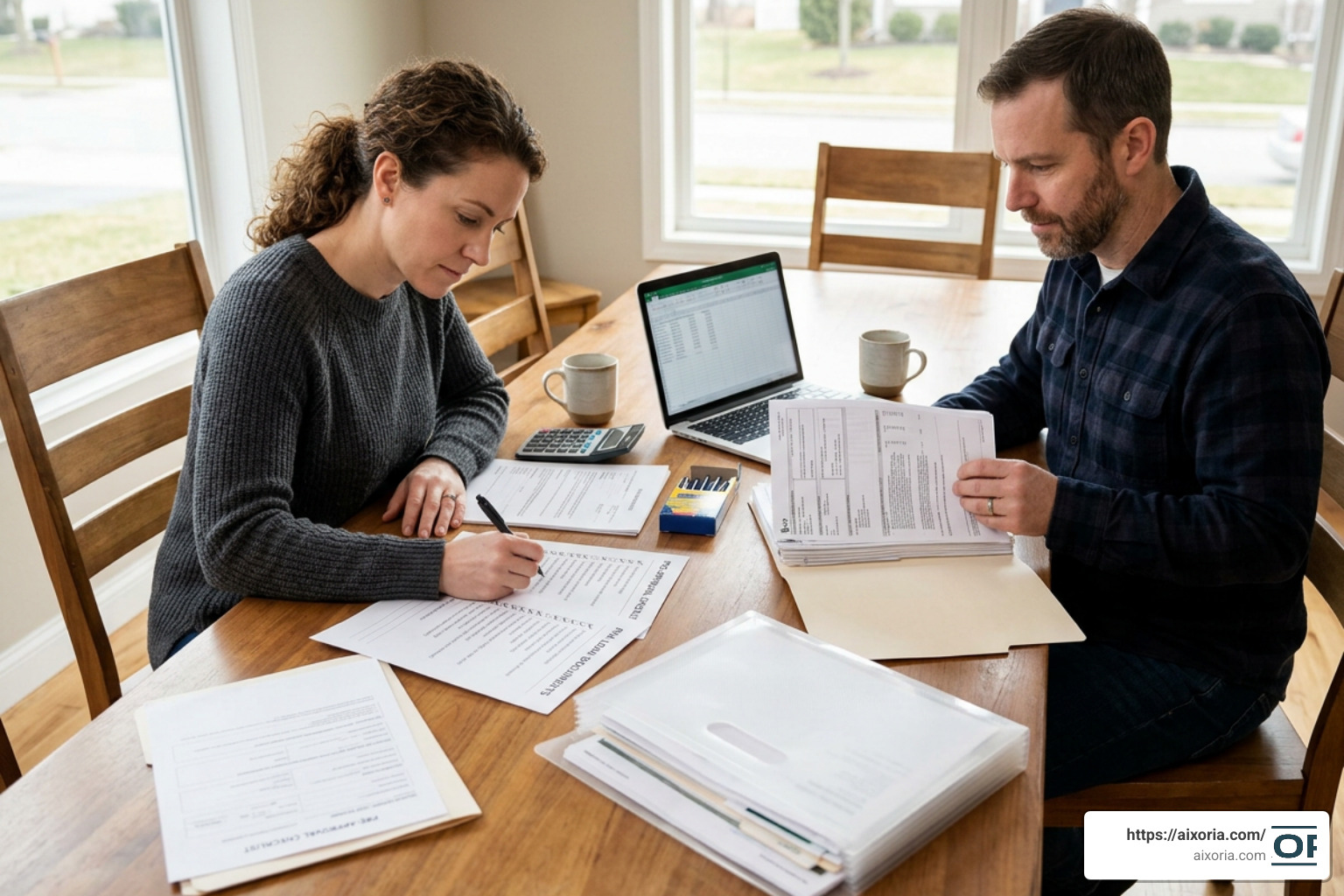
As we navigate through 2026, the mortgage market continues to evolve, but the core requirements for securing an FHA loan remain highly accessible. Lenders will look closely at your overall financial health, but they are primarily interested in your debt-to-income (DTI) ratio, your employment stability, and your down payment source.
To help you prepare your checklist, let’s explore the baseline guidelines for 2026. For a comprehensive overview of the current year’s standards, look through the FHA Home Loan Requirements 2026: Complete FHA Mortgage Guide For U.S. Buyers.
Income and Employment Verification
To qualify, you don’t need to make a massive salary, but you do need to show that your income is stable and reliable. Lenders typically look for a consistent two-year work history.
To verify this, you will need to provide:
- W-2 forms from the past two years.
- Recent pay stubs covering the last 30 days.
- Tax returns (especially if you earn commission, bonuses, or are self-employed).
If you are self-employed, don’t panic. You can still qualify by providing two years of signed tax returns, profit-and-loss statements, and proof that your business has been operational and stable for at least 24 months.
Debt-to-Income (DTI) Limits and Manual Underwriting
Your debt-to-income (DTI) ratio is the percentage of your gross monthly income that goes toward paying debts (like credit cards, auto loans, student loans, and your future mortgage payment).
The FHA generally looks for two specific ratios:
- Front-End DTI (Housing Ratio): This is your projected mortgage payment, property taxes, and home insurance. It should ideally be no higher than 31% of your gross monthly income.
- Back-End DTI (Total Debt Ratio): This includes your housing costs plus all other monthly recurring debts. The standard FHA ceiling is 43%.
However, FHA guidelines are famously flexible. If you have a strong credit score, significant cash reserves, or a larger down payment, lenders can use automated underwriting to approve DTIs as high as 47% (front-end) and 57% (back-end). If your application doesn’t get automated approval, it may undergo manual underwriting, where a human underwriter reviews your file to see if you have compensating factors that justify approving the loan.
FHA Loans vs. Conventional Mortgages
Choosing between an FHA loan and a conventional mortgage is one of the most important decisions you will make on your homebuying journey. To help you visualize the differences, we have put together a quick comparison table:
| Feature | FHA Loan | Conventional Loan |
|---|---|---|
| Minimum Credit Score | 500 (with 10% down) or 580 (with 3.5% down) | Typically 620 |
| Minimum Down Payment | 3.5% | 3% (for select first-time programs) or 5% standard |
| Mortgage Insurance | Upfront (1.75%) AND Annual (usually 0.55%) | Private Mortgage Insurance (PMI) if down payment is <20% |
| How to Cancel Insurance | Refinance or pay 10% down (drops after 11 years) | Automatically drops once you reach 22% equity |
| Property Standards | Strict safety and livability inspection | Standard appraisal |
| Seller Concessions | Seller can pay up to 6% of closing costs | Typically capped at 3% to 9% depending on down payment |
To weigh these options against your personal financial goals, check out Experian’s guide on Is an FHA Loan Right For You?.
Pros of Choosing an FHA Loan
- Lenient Credit Standards: You don’t need a spotless credit report, making it the perfect entry point for younger buyers or those rebuilding their financial lives.
- Low Down Payment: Saving up 20% for a down payment in 2026 can feel like an impossible mountain to climb. The 3.5% option keeps your hard-earned cash in your bank account.
- Faster Recovery After Hardship: You can qualify for an FHA loan just two years after a Chapter 7 bankruptcy or three years after a foreclosure, whereas conventional loans often require a four-to-seven-year waiting period.
- Non-Occupant Co-Borrowers: FHA allows family members who won’t live in the house with you to sign onto the mortgage, helping you meet the income requirements.
Cons of Choosing an FHA Loan
- Lifetime Mortgage Insurance: If you put down less than 10%, you have to pay the annual mortgage insurance premium for the entire life of the loan. The only way to get rid of it is to refinance into a conventional loan later.
- Strict Appraisal Standards: The FHA appraisal process is rigorous. If the home has peeling paint, structural issues, or outdated electrical systems, the seller must fix them before the loan can close.
- Lower Loan Limits: FHA limits are lower than conventional limits in many counties, which might limit your options in expensive neighborhoods.
- Seller Perception: In highly competitive markets, some sellers prefer conventional buyers because they assume FHA loans come with too much red tape.
Understanding FHA Mortgage Insurance and Property Guidelines
Because FHA loans are designed for higher-risk borrowers, the government protects itself by requiring mortgage insurance. This insurance is split into two parts, and it is crucial to understand how they impact your monthly budget. For a detailed strategic outlook on managing these costs, explore the Smart FHA Loan Strategy For 2026 First Time Home Buyers.
Let’s break down the two types of Mortgage Insurance Premiums (MIP):
- Upfront MIP (UFMIP): This is a one-time fee equal to 1.75% of your total loan amount. For example, on a $300,000 mortgage, the upfront premium would be $5,250. You can pay this in cash at closing, but most buyers choose to roll it directly into their total loan balance.
- Annual MIP: This is an ongoing fee that is broken up into 12 monthly installments and added to your monthly mortgage payment. For most buyers putting 3.5% down in 2026, the annual premium is 0.55% of the loan amount. On a $300,000 loan, this adds roughly $137 per month to your payment.
If you put down 10% or more, your annual MIP will automatically drop off after 11 years. If you put down less than 10%, you will pay it for the life of the loan unless you eventually refinance into a conventional mortgage.
Eligible Property Types and FHA Appraisal Standards
You can use an FHA loan to purchase several different types of residential properties, provided they meet strict safety guidelines:
- Single-Family Homes: The traditional suburban house.
- Multi-Unit Properties (1-4 Units): You can buy a duplex, triplex, or fourplex, live in one unit, and rent out the others to help cover your mortgage.
- FHA-Approved Condominiums: The condo community must be on the FHA’s approved list, though lenders can sometimes request single-unit approvals.
- Manufactured and Mobile Homes: Must be built after June 15, 1976, and permanently affixed to land you own or are buying.
During the appraisal, the inspector will look for “red flags” that threaten the health and safety of the occupants. Common deal-breakers include chipping lead-based paint, exposed wiring, non-functioning heating systems, and severe structural damage.
2026 FHA Loan Limits
Every year, the government adjusts the maximum amount you can borrow using an FHA loan based on local home prices. In 2026, the limits have increased to reflect the current housing market:
- The “Floor” (Low-Cost Areas): For single-family homes in areas with modest home prices, the limit is $541,287.
- The “Ceiling” (High-Cost Areas): In expensive metropolitan markets, the limit goes all the way up to $1,249,125 for a single-family home.
If you are buying a multi-unit property, these limits are even higher, allowing you to access more borrowing power if you plan to generate rental income.
Step-by-Step Guide to Applying for an FHA Loan
Ready to take the plunge? The homebuying process can feel overwhelming, but breaking it down into structured steps will keep you on track.
Finding an FHA-Approved Lender
Your first step is to find a bank, credit union, or mortgage broker that is authorized to write FHA loans. Don’t just settle for the first bank you find. Compare interest rates, loan terms, and check to see if they have any lender overlays that might make it harder for you to qualify. You can also consult a HUD-approved housing counselor by calling (800) 569-4287 for free, unbiased advice on finding local programs.
Gathering Your Documentation
To speed up your pre-approval, start gathering your financial documents early. You will need:
- Government-issued ID.
- Social Security number (to run a credit check).
- Two years of tax returns and W-2s.
- 30 days of consecutive pay stubs.
- Two months of bank statements showing where your down payment funds are coming from.
- A signed gift letter if a family member is helping you cover your down payment or closing costs.
Once your lender verifies these documents, they will issue a pre-approval letter, which shows sellers that you are a serious, qualified buyer. From there, you can team up with a real estate agent, find your dream home, pass the FHA appraisal, and head to the closing table!
Frequently Asked Questions about FHA Mortgages
Can you use an FHA loan to buy a fixer-upper?
Yes, but you cannot use a standard FHA loan for a home that needs major repairs. Instead, you will need to apply for an FHA 203(k) Rehabilitation Loan. This specialized program allows you to bundle the purchase price of the home and the cost of the necessary renovations into a single, convenient mortgage. It is an excellent option for buying older homes or properties that have been neglected.
How long do you have to pay FHA mortgage insurance?
If you make a down payment of less than 10%, you must pay FHA mortgage insurance for the entire life of the loan. If you make a down payment of 10% or more, the insurance will automatically be removed after 11 years. That many buyers choose to start with an FHA loan and then refinance into a conventional loan once their credit score improves and they build 20% equity in their home.
What properties are disqualified from FHA financing?
The FHA will not finance investment properties, vacation homes, or properties intended for transient occupancy, such as short-term Airbnb rentals or bed-and-breakfasts. Additionally, manufactured homes built before June 15, 1976, properties located in active flood zones without proper insurance, and homes with severe, unaddressed safety hazards (like active mold or structural failure) will be disqualified.
Conclusion
At Aixoria, we believe that understanding the financial landscape is the first step toward building long-term wealth and security. Achieving homeownership in 2026 doesn’t require a perfect financial past — it requires a smart strategy. By taking advantage of the FHA program, you can bypass the steep hurdles of conventional lending and step into a home of your own.
As you plan your next major life step, leverage modern digital tools to keep your finances organized. Learn more about AI and digital tools at Aixoria to see how we can help you streamline your planning, optimize your budget, and achieve your personal goals with ease.